

The Danger of Rainbows
A Year with Hurricane Helene

Back on September 25, 2024, I had just initiated a new series called “Open Tabs,” which was going to be a not-so-random gathering of current objects of my fascination. I've started a lot of projects that didn’t make it all the way to the end, or at least what I imagined might be the end. A Deeper South itself has been through various incarnations since it inception in 2018. The Detourist podcast has sputtered in fits and starts for years as well, and in my most recent attempt to keep it going, I only made it nine episodes in (which, apparently, is longer than most podcasts make it). I had intended to trace a rough itinerary from the Mississippi Delta to Atlanta, and in the meantime looping up and around through Memphis, down through the Alabama Black Belt to north Florida, the Georgia and South Carolina coasts. I imagined this little trip might take me 10 or 12 episodes. I made nine episodes and never made it halfway through the Mississippi Delta. But that sort of the way it goes with detourism. You don't know really where you’re going. You don’t know if you’re going to get where you don't know you're going, or maybe even if you’re going anywhere at all.
But my last attempt to start something new here in late September of last year ran into a different kind of roadblock. Not Pete’s usual ADHD-induced meandering from one big idea to the next; in this case, a much bigger and more deadly obstacle came across my path. The first and so far only edition of Open Tabs concluded with “I’ll be at The Brooklyn Book Festival in New York this week, so if you’re in the area, holler!” In retrospect that was an auspicious and even foreboding closer.
The following day — Thursday, September 26 — I flew up to New York for a book event with several other authors as a satellite event of the Brooklyn Book Festival. I wasn't sure it was even going to make it out, because it had rained so torrentially the night before. Another, bigger storm was coming and the last thing I really wanted to do was to leave my family to fend for themselves in what could be a major disruption, but probably wouldn’t be, since this is Asheville and that sort of thing doesn’t really happen here.
That of course, is how almost everyone in Asheville thought until September 27. After the Brooklyn Book Event on Thursday night, I returned to my hotel room where I witnessed scenes of unfathomable devastation in Asheville and in western North Carolina. My wife and four kids were still at home in Asheville without power, water, or Internet, basically cut off from the rest of the world. And that’s speaking only in terms of communication; for several days thereafter, Asheville itself was literally cut off from the world geographically. There was no way in and no way out. I-26 and I-40 were both latticed with trees for miles in every direction. Near the western and northern borders with Tennessee, there was no I-26 nor I-40 to speak of at all. Whole segments of them had washed out and fallen into the Pigeon River and the Nolichucky River.
In my solitude at a chain hotel in Brooklyn, I spent most of my free hours either watching The Weather Channel or taking advantage of my suddenly-not-taken-for-granted Internet connection to learn more about what was happening back at home. Paradoxically, although I was hundreds of miles away from home, I knew more about the scene in Asheville than my family who was stuck there did. At one point, during one of those rare windows of opportunity when a working cell signal was to be had, my eldest son called me frantically on the phone.
“Dad, Dad,” he said.
“What is it? What’s wrong?”
“Where are your old pipes?” he asked. “We are dressing up as pirates and we need them!”
At the time, they were in a state of suspension, unaware of the magnitude of what was unfolding outside. They could hear the sound of not-that-distant trees cracking and falling, but when I was able to get through to Charlie that Friday, he reported — in his classically understated fashion — that they “just had some rain.” Without the standard modern conveniences, they were returning, if only for a little while, to a more humane mode of existence, playing games by daylight and retiring with the sun. Only when they were finally able, on Saturday, to venture out, did the scale of devastation become manifest.
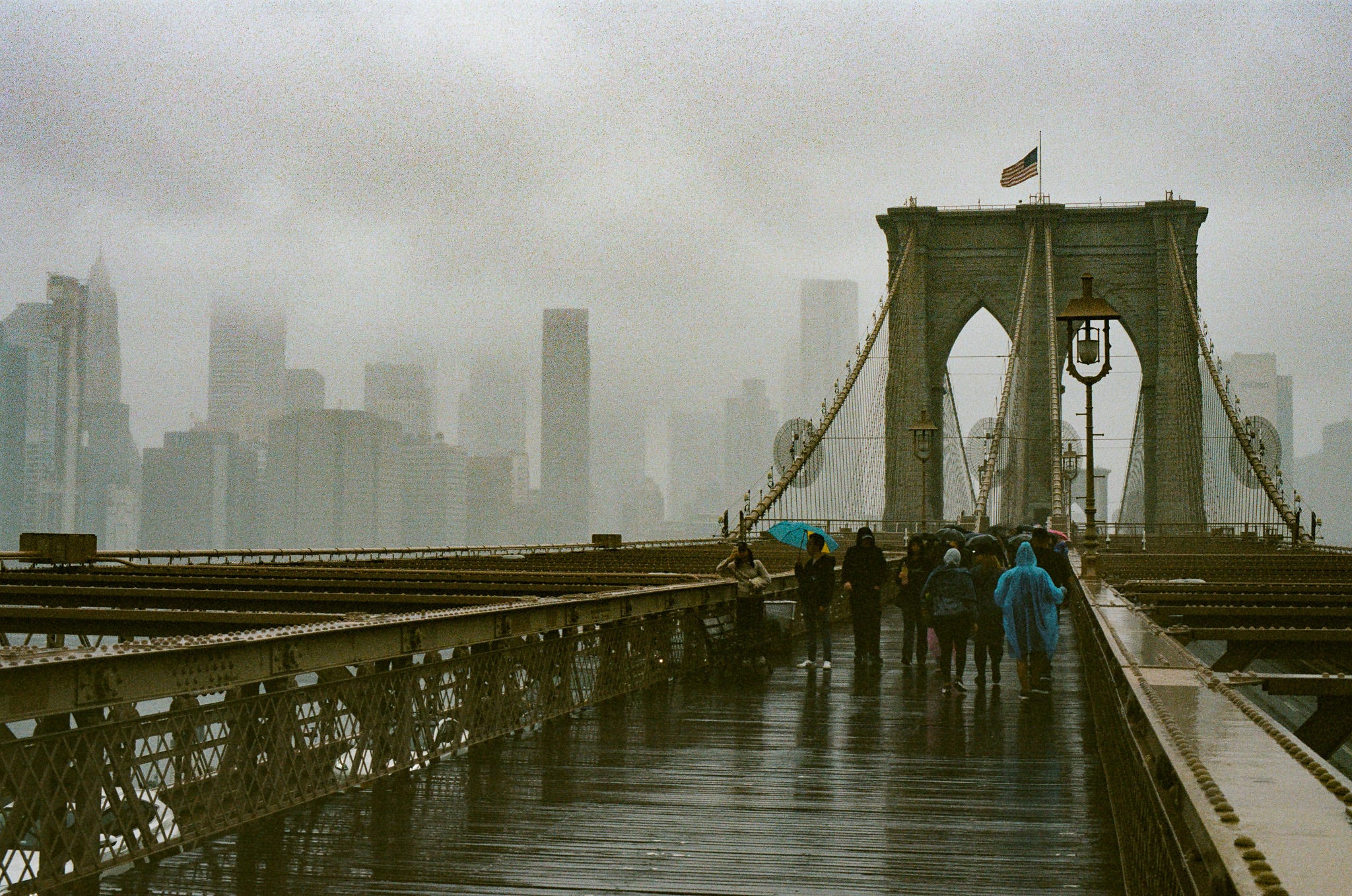
Back in New York, I exchanged messages with people who had relatives in western North Carolina they couldn’t locate. I ventured out across the Brooklyn Bridge in an ominously saturated weather-scape, but the impact of Hurricane Helene was not apparent on anyone up here. When I checked into a new hotel across the Hudson in lower Manhattan, the receptionist asked where I was from.
Oh, that’s such a beautiful area, she said. Not right now, I thought. The news about Helene, insofar as it was on anyone’s minds that morning, obviously didn’t land on the average person in New York the way it did on me.
For the next several days I carried it around like a kind of secret, incommunicable datum of information, but in reality what was gestating within me was more like an actual existential crisis. And for once that Saturday evening crisis was not the University of Georgia football team getting clobbered by the University of Alabama, in a game that I was not really watching nor even caring about, as I sat alone again in a New York hotel room. (Although in retrospect, the totally unnecessary provocation that concluded the book event the previous Thursday turned out to be a portent, when one member of the audience punctuated the Q&A session with a closing Roll Tide!)
That comment alone might have been enough to question the point of anything. I had, after all, come all the way up here on my own dime for a book event, in support of my so-called career or my “vocation” as a writer. As the Dawgs got hammered in the background, and as the floodwaters only seem to rise higher and higher on my 15-inch laptop screen, I started to ask myself, what the hell am I doing with my life? Yes, the book was important to me and the fruit of many years of labor. But what could possibly be worth the price of leaving my family at a time when I should have been with them? Not that they needed me; they were perfectly fine on their own, probably even better off not knowing what was going on outside the rest of the region, to say nothing of being free of my own unwelcome sense of drama and disorder.
After four days stranded in New York City (for the second time in a year), I finally made it out on a flight to Atlanta, borrowed my dad’s car, hitched a rented U-Haul to it and loaded it with supplies, and drove back on the dark, barely-cleared highways back into Asheville, listening to Kris Kristofferson, who had just died the day after the storm. From the South Carolina line north, the margins of the interstate narrowed with the encroachments of a sideways forest, rough-cut trunks extending up to the edge of what little traffic there was. Hundreds of fresh circular wounds, beaded with still-running sap looking for a non-existent vessel, silently faced into the roadway.
In the aftermath of Hurricane Helene, I talked to many artists. To a person, every single one of them was confronting fundamental questions about themselves, where they were in the world, and what they were doing with their lives. I wasn't the only one facing an existential crisis. But it sure as hell seemed at the time that writing was not in my future in any capacity. What good had any of this done me or my family? It came over me like a mudslide: what are you doing with yourself?
For good while after that, I decided to hang it up for good. I deleted most of my social media accounts, quit reading the news, stopped accepting new subscriptions here on Substack. The events that I had slated for October and November were all canceled, and a future I had imagined for myself suddenly no longer existed.
There is another dimension to this story that has to do with the book itself and its aftermath—that is, the launch, the book tour, what I learned about what I had written, and especially what I learned about myself during that time. All of these factors mashed up together led me to the inevitable conclusion that that road ahead I thought I had wanted to explore since the fourth grade, was now a dead end.
I am aware that wealth and privilege have insulated me from some forms of misfortune, and have enabled me to live in a neighborhood that was far less vulnerable to destruction than many people who have fewer resources than I do. I also know that hurricanes don’t care about your feelings, or your tax bracket, or your race. This is one reason, maybe, why we like to anthropomorphize major hurricanes, as if to attribute personality, motive, agency, even malice, to them: because it feels less true to speak in the detached scientific idiom of High Meteorology than to say that Helene just does not give a shit who you are or where you live.
The season following Helene’s arrival became for me an intense season of abandonment, of subtraction, of renunciation. I came to believe what a friend of mine had told me a few years before: you’re only really free from your own art when it ceases to matter to you, when you are beholden to it no more, when it has no possession over you, when you are indifferent to it. A year on, though, I think that way of putting it places the artist at the center, when it is the art that wants to become free from its creator’s need to possess it. It is probably more true to say that your art becomes free itself when you (as the artist) admit that you do not understand it.
As a young boy in Presbyterian Sunday School class, the story of Noah and the Great Flood were always delivered with one particular moral endgame in mind: the beautiful rainbow that appears in the end of the story. It will all work out, the message seems to be. Everything is going to turn out alright. Live just long enough, or read Flannery O’Connor, you take your pick: either one will breed this idea out of you eventually.
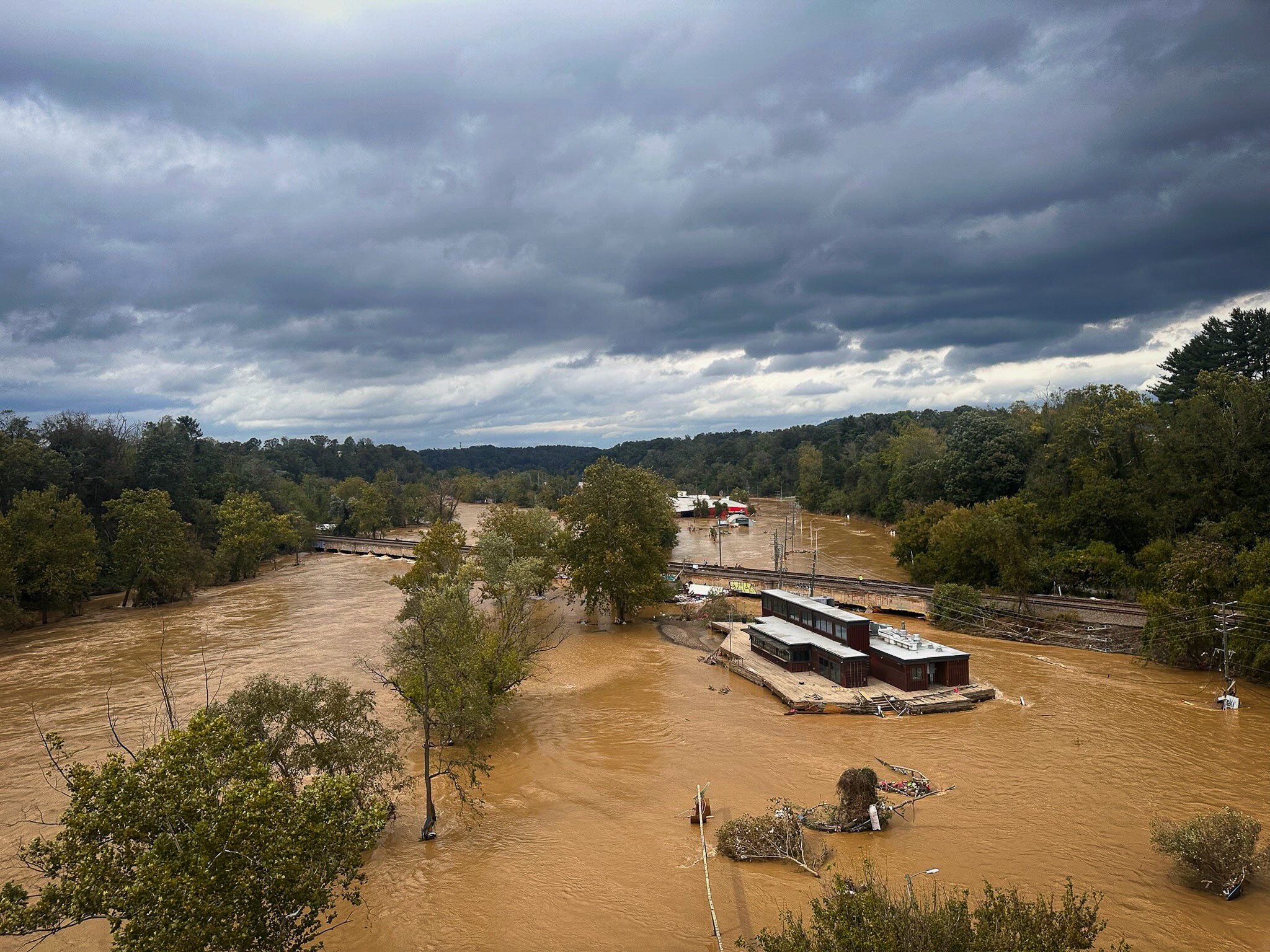
Even better: witness up-close the aftermath of a devastating hurricane and flood in a part of the world utterly unversed in this particular language of natural disaster. Or imagery: the visual language of major floods tends to be most arresting and provocative when it traffics primarily in high water, new lakes where there once was just sky, rooflines stranded in an apocalyptic seascape, semi trucks and houses swept along in an indifferent current, raging waters eating away at what seemed like solid earth. Less prolific, perhaps, are the images of what comes after.
In those Sunday School classes and the world they constructed for the imagination, the abiding images of the Noah story were also the most highly promoted ones: happily twinned and always-smiling animals, of course (with nary a mention of the staggering amount of piss and shit they must have generated in that ark), the solitary dove touching down from a most consequential flight, or—most of all—the lone ark stuck on Mount Ararat, high and dry (as with the animals, these depictions came with a similar non-interest in the logistics of getting the entire animal kingdom down from there).
It turns out—unsurprisingly, of course—that my Sunday School teachers (God bless them) left at least one very important detail out of their (tragically, as it turns out) sappy accounts of the flood in Genesis. (To be fair, Genesis itself is not exactly forthcoming on the subject, either). What they left out in the prejudice towards the rainbow is the utterly inconceivable amount of shit and debris and toxic sludge and human wreckage a great flood leaves behind. Half a year later, it was not that different in Asheville. There are, even now, vestiges of destruction that will probably never get cleaned up. Hell, the McDonald’s in Biltmore Village just started to rebuild this week. It wasn’t that long ago that a belly-up tractor trailer still festered in its parking lot. And across the street, the Episcopal Cathedral of All Souls remains surrounded with a chain-link fence, closed for not-even-God-knows how long. It is its own sort of salutary reminder that certain theodicies—those quaint and pious justifications of suffering and natural disaster are henceforth off limits. That that way of reading the story of the flood in Genesis is and never was any good.
The flood in Genesis may have lasted for 150 days (or more), but the recovery of the earth unquestionably took a whole lot longer, probably decades. There is a valuable lesson here for those with ears to hear: you can have your rainbows, but not without the shit. Grace does not leave you without scars. As O’Connor said, “even the mercy of God burns.”
The week of Helene, the lectionary readings from the Old Testament were from Ecclesiastes. The day of the hurricane’s arrival in Asheville, the text read:
One generation passes and another comes,
but the world forever stays.
The sun rises and the sun goes down;
then it presses on to the place where it rises.
Blowing now toward the south, then toward the north,
the wind turns again and again, resuming its rounds.
All rivers go to the sea,
yet never does the sea become full.
To the place where they go,
the rivers keep on going.
That Monday, the already scheduled reading for our homeschool was from Job 38, God’s unanswerable rebuttal to Job, when
The Lord addressed Job out of the storm and said:
Who shut within doors the sea,
when it burst forth from the womb;
when I made the clouds its garment
and thick darkness its swaddling bands?
When I set limits for it
and fastened the bar of its door,
and said: Thus far shall you come but no farther,
and here shall your proud waves be stilled!
At the same time, as all of these crises — some real, some imagined — were orbiting, my own path was suddenly latticed with figures who seem to understand this at a very deep level. A letter from Nick Cave to a fan tempted by cynicism began circulating again. A conversation between Stephen Colbert and Anderson Cooper about grief and gratitude blew into the middle of the road. And at the same time, the once seemingly irresistible forces of my own family history that had silenced or marginalized sorrow had suddenly lost their power. There seemed to be grief on every side, and no way of fending it off. And about this time, a passage from Charles Péguy, who, days before he was killed in the early days of fighting in World War I, had a sort of revelation, maybe a premonition, about the nature of joy:
“We enter here into an unknown domain which is the domain of joy. A hundred times less known, a hundred times more strange, a hundred times less ourselves than the kingdoms of sorrow. A hundred times deeper and, I believe, a hundred times more fruitful . . . . Blessed are those who one day will have some idea of it.”
What Helene has strangely left me with is a palpable, if still elusive, sense of the mystery at the heart of Christian tradition and teaching: suffering and joy are not polar extremes, but so intimately wedded to one another as to constitute one flesh. To refuse suffering is to refuse joy. To reject any of the microfibers of the whole mysterious tapestry of being human is ultimately to refuse the whole.
Very beautiful, thank you
❤️❤️